
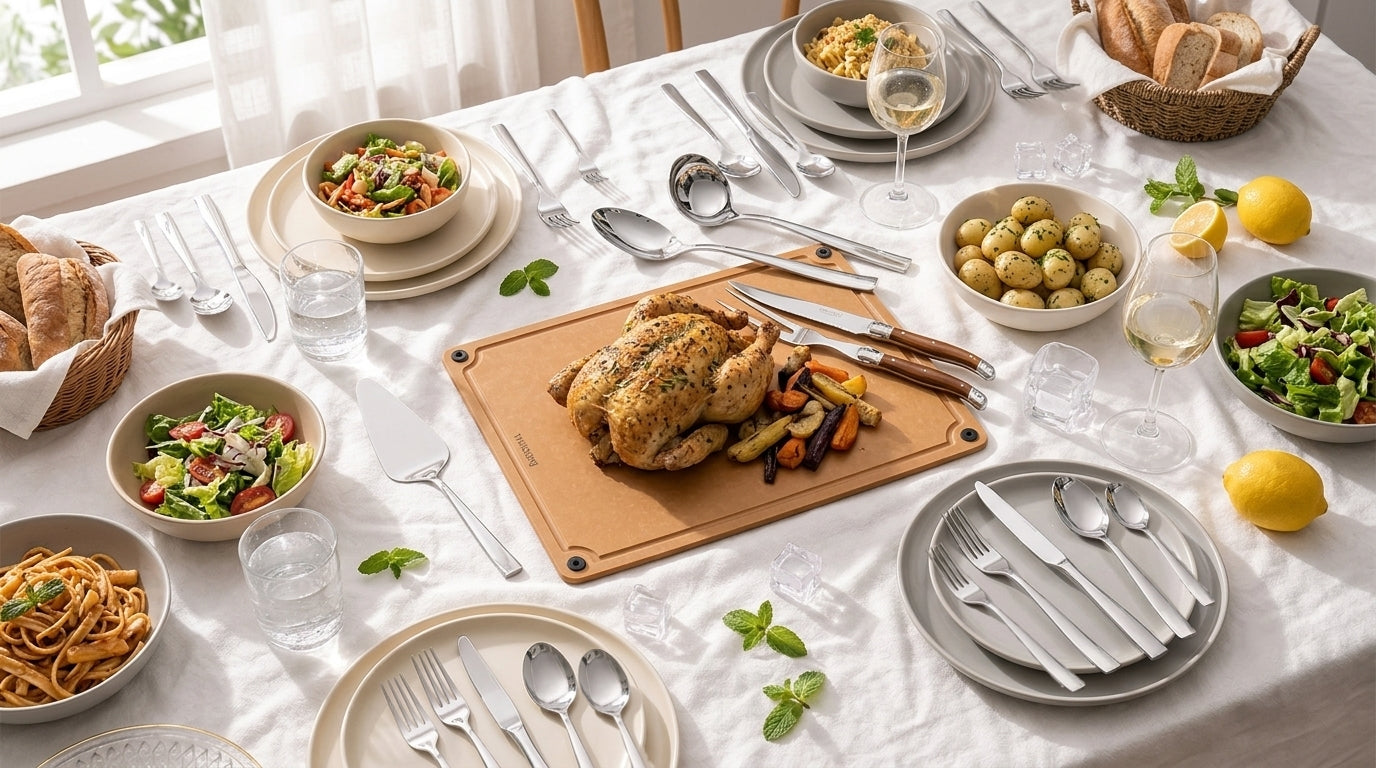
A well-set table is not only about plates, forks, knives, and glasses. The way food is served matters just as much.
Serving utensils help move food from kitchen to table with more control, less mess, and a more polished presentation. A gravy ladle makes sauces easier to pour. A pastry server keeps desserts intact. A carving fork and knife help serve roasted meats more confidently. A tiered serving stand adds height and structure to appetizers, pastries, fruit, and desserts.
For everyday homes, the goal is not to own every serving tool available. The goal is to build a practical serving setup that supports the way meals are actually shared: family dinners, holiday meals, weekend brunches, dessert tables, casual gatherings, and simple hosting moments.
This guide explains which serving utensils are most useful, what each piece is used for, how to choose between everyday and hosting pieces, how to pair serving utensils with flatware and cutting boards, and how to create a table that feels organized, functional, and refined.
In This Guide
- The Quick Answer: What Serving Utensils Do You Need?
- What Counts as a Serving Utensil?
- Serving Utensils vs. Cooking Utensils
- The Core Serving Pieces Every Home Should Understand
- Serving Spoon: Best for Sides, Vegetables, and Family-Style Meals
- Slotted Serving Spoon: Best for Foods with Liquid
- Gravy Ladle: Best for Sauces, Gravies, and Dressings
- Pastry Server: Best for Cakes, Pies, Tarts, and Desserts
- Carving Knife and Fork Set: Best for Roasts, Turkey, Chicken, and Large Cuts
- Tiered Serving Stand: Best for Desserts, Appetizers, and Table Display
- Cheese Knives and Appetizer Tools
- How Many Serving Utensils Should a Home Own?
- How to Set Up a Family-Style Table
- How to Build a Hosting Setup for Holidays and Gatherings
- How to Pair Serving Utensils with Flatware, Cutting Boards, and Dinnerware
- How to Store and Care for Serving Utensils
- When to Add More Serving Pieces
- Shop Barenthal Serving Essentials
- Frequently Asked Questions
The Quick Answer: What Serving Utensils Do You Need?
Most homes benefit from a small, focused serving utensil setup rather than a crowded drawer full of rarely used pieces.
A practical serving setup usually includes:
- Serving spoon
- Slotted serving spoon
- Gravy ladle
- Pastry server
- Carving knife and fork
- Serving fork
- Cake server
- Cheese knife or appetizer knife
- Cutting board or serving board
- Tiered serving stand for desserts or appetizers
For everyday meals, a serving spoon, slotted spoon, and ladle may be enough. For hosting, add a pastry server, carving set, serving fork, cheese knife, and display piece such as a tiered stand.
The right serving utensils depend on the type of meals served most often. A household that serves soups, sauces, and gravies needs a ladle. A home that hosts birthdays, brunches, holidays, or dessert tables needs a pastry server or cake server. A household that prepares turkey, chicken, roasts, or large cuts of meat needs a carving knife and fork.
The best serving setup should make meals easier to share and more beautiful to present.
What Counts as a Serving Utensil?
A serving utensil is any tool used to move food from a dish, tray, board, pan, platter, or bowl to an individual plate.
Serving utensils are different from personal flatware. A dinner fork is used by one person. A serving fork helps move food from a shared dish. A teaspoon is used for individual bites or drinks. A serving spoon helps portion vegetables, rice, potatoes, sides, or casseroles.
Serving utensils are also different from many cooking tools. A spatula used at the stove may not look right on the dining table. A polished serving spoon, ladle, pastry server, or carving set can move more naturally into a table setting.
Serving Utensils Should Help With
- Portioning food
- Serving sauces
- Lifting desserts
- Carving meats
- Moving appetizers
- Presenting bread or pastries
- Sharing family-style dishes
- Keeping the table cleaner
- Making hosting feel more organized
A serving utensil becomes useful when it solves a real table problem. It should make food easier to serve without forcing guests to use personal forks, spoons, or knives in shared dishes.
Serving Utensils vs. Cooking Utensils
Cooking utensils are used during food preparation. Serving utensils are used when food is brought to the table or presented to guests.
A soup ladle can do both. It can move soup from pot to bowl, and it can sit at the table for family-style serving. A slotted spoon can lift vegetables from cooking liquid and later serve vegetables from a shared dish. A pasta spoon can help lift noodles from a pot and serve them from a bowl.
But not every cooking tool belongs on the table. A heavily used spatula, stained spoon, or oversized kitchen tool may not create the right presentation for guests.
Cooking Utensils Are Used For
- Stirring
- Turning
- Draining
- Mixing
- Sautéing
- Lifting food from cookware
- Working with heat and cookware surfaces
Serving Utensils Are Used For
- Presenting food
- Portioning shared dishes
- Serving sauces
- Moving food from platter to plate
- Supporting family-style meals
- Keeping the table clean and organized
The strongest kitchen-to-table setup includes both: practical cooking tools for preparation and polished serving pieces for the table.
The Core Serving Pieces Every Home Should Understand

Every home does not need the same serving tools, but there are several pieces worth understanding before building a collection.
The most useful serving pieces are:
- Serving spoon
- Slotted serving spoon
- Gravy ladle
- Pastry server
- Serving fork
- Carving knife and fork
- Cheese knife
- Cake server
- Tiered serving stand
- Cutting board or serving board
Each piece has a different role. A ladle should not be replaced with a regular spoon when serving gravy. A dinner knife should not replace a carving knife when slicing a roast. A fork should not be used to serve cake when a pastry server can lift the slice more cleanly.
A complete table feels more refined when the correct tools are used for the correct food.
Serving Spoon: Best for Sides, Vegetables, and Family-Style Meals
A serving spoon is one of the most useful pieces in any home.
It is used for foods that need to be scooped, portioned, or transferred from a bowl or dish to a plate.
Use a serving spoon for:
- Rice
- Pasta
- Potatoes
- Roasted vegetables
- Green beans
- Casseroles
- Salads
- Stuffing
- Fruit salad
- Family-style sides
A serving spoon is larger than a standard dinner spoon, making it easier to serve the right amount of food without needing multiple scoops.
When a Serving Spoon Matters Most
A serving spoon becomes important when food is shared. Instead of having guests use their personal flatware in a shared dish, a proper serving spoon keeps the table cleaner and more organized.
For family dinners, holidays, potlucks, and casual hosting, this is one of the first serving pieces worth owning.
Slotted Serving Spoon: Best for Foods with Liquid
A slotted serving spoon is designed to lift food while leaving excess liquid behind.
This is helpful when serving foods from broth, sauce, oil, dressing, or cooking liquid. The slots allow liquid to drain before the food reaches the plate.
Use a slotted serving spoon for:
- Green beans
- Boiled vegetables
- Braised vegetables
- Pickled foods
- Poached foods
- Fruit in syrup
- Pasta pieces
- Foods served in sauce
- Fried foods
- Marinated vegetables
A slotted spoon helps keep plates cleaner. It prevents too much liquid from spreading across the plate and interfering with other foods.
When a Slotted Serving Spoon Matters Most
A slotted spoon is useful when the food should be served, but the liquid should stay behind.
It is especially helpful for vegetables, appetizers, foods in broth, and dishes where presentation matters.
Gravy Ladle: Best for Sauces, Gravies, and Dressings

A gravy ladle is designed for controlled serving of sauces and liquids.
It is smaller and more precise than a large soup ladle, making it useful for gravies, pan sauces, dressings, dessert sauces, and warm toppings.
Use a gravy ladle for:
- Gravy
- Pan sauces
- Dressings
- Cream sauces
- Dessert sauces
- Warm syrup
- Custard sauce
- Au jus
- Small-batch soups
- Table-side sauce service
A gravy ladle helps prevent overpouring. It also looks more polished on the table than using a regular spoon or pouring directly from a pot.
When a Gravy Ladle Matters Most
A gravy ladle becomes essential during holidays, roast dinners, Thanksgiving meals, Christmas dinners, formal dinners, and any meal where sauce is served separately.
It gives guests more control and helps keep the table cleaner.
Pastry Server: Best for Cakes, Pies, Tarts, and Desserts

A pastry server is designed to lift delicate slices without breaking them apart.
Desserts often need support from underneath. A fork or spoon can damage the shape of cake, pie, tart, quiche, or pastry. A pastry server gives the slice a stable surface as it moves from tray to plate.
Use a pastry server for:
- Cakes
- Pies
- Tarts
- Quiche
- Brownies
- Cheesecake
- Pastries
- Dessert bars
- Tea cakes
- Layered desserts
A pastry server is useful for both casual and formal desserts. It makes dessert service feel cleaner and more intentional.
When a Pastry Server Matters Most
A pastry server matters when presentation is part of the moment: birthdays, holidays, brunches, baby showers, tea parties, dessert tables, and dinner parties.
Even a simple cake feels more polished when served with the right tool.
Carving Knife and Fork Set: Best for Roasts, Turkey, Chicken, and Large Cuts

A carving knife and fork set is designed for larger foods that need controlled slicing and serving.
The carving knife slices through cooked meats, while the fork holds food steady during carving. Together, they support cleaner slices and more confident table presentation.
Use a carving knife and fork set for:
- Turkey
- Roast chicken
- Ham
- Prime rib
- Roast beef
- Pork loin
- Lamb
- Large poultry
- Holiday meats
- Family-style roasts
A carving set is especially useful when food is presented whole and sliced at the table or shortly before serving.
Why a Carving Set Matters
Using an everyday dinner knife for a roast can make serving difficult. A carving knife gives more length and control, while the fork helps hold the meat in place.
For holidays and gatherings, this tool can make the difference between a rushed serving moment and a polished one.
Tiered Serving Stand: Best for Desserts, Appetizers, and Table Display

A tiered serving stand adds height to the table and helps display food without taking up too much surface space.
It is especially useful when serving smaller foods that benefit from visual arrangement.
Use a tiered serving stand for:
- Cupcakes
- Pastries
- Cookies
- Macarons
- Fruit
- Tea sandwiches
- Appetizers
- Mini desserts
- Brunch bites
- Holiday treats
A two-tier stand can make a small spread feel more abundant and organized. It also helps separate foods by type, making the table easier for guests to navigate.
When a Tiered Stand Matters Most
A tiered stand is useful for tea parties, brunches, dessert tables, baby showers, holiday spreads, birthdays, and casual gatherings.
It works especially well when the table needs height and structure without adding too many separate trays.
Cheese Knives and Appetizer Tools
Cheese knives and appetizer tools help serve smaller bites more cleanly.
A cheese knife is useful for soft cheeses, firm cheeses, spreads, and small appetizer boards. It can be paired with a cutting board or serving board for a relaxed but polished table.
Use cheese and appetizer tools for:
- Soft cheese
- Firm cheese
- Cheese boards
- Charcuterie boards
- Spreads
- Butter
- Small appetizers
- Fruit and cheese pairings
- Crackers and bites
A dedicated cheese knife or appetizer knife keeps the board cleaner and prevents guests from using personal knives on shared food.
When Cheese Tools Matter Most
Cheese tools are most useful for cocktail hours, wine nights, appetizer boards, brunch spreads, and casual hosting.
They are small pieces, but they help the table feel more intentional.
How Many Serving Utensils Should a Home Own?
The right number of serving utensils depends on household size, cooking style, and hosting frequency.
A small household that rarely hosts may only need a few pieces. A home that serves family-style meals or hosts holidays needs a more complete setup.
Minimal Serving Setup
A minimal setup includes:
- Serving spoon
- Slotted serving spoon
- Gravy ladle
- Pastry server
This supports everyday sides, vegetables, sauces, and desserts.
Everyday Family Setup
A family setup includes:
- Serving spoon
- Slotted serving spoon
- Gravy ladle
- Pastry server
- Serving fork
- Cutting board or serving board
- Pasta spoon
- Soup ladle
This supports shared meals, weeknight dinners, pasta, soups, and simple dessert service.
Hosting Setup
A hosting setup includes:
- Serving spoon
- Slotted serving spoon
- Gravy ladle
- Pastry server
- Serving fork
- Carving knife and fork
- Cheese knife
- Cake server
- Tiered serving stand
- Cutting board or serving board
- Extra serving pieces for sides and sauces
This setup works for holidays, brunches, dinner parties, birthdays, and large family meals.
How to Set Up a Family-Style Table

A family-style table should make food easy to pass, portion, and share.
Place the main dishes in the center or on a sideboard. Add the correct serving utensil to each dish before guests sit down. Do not expect guests to search for utensils after the meal starts.
Family-Style Table Setup
- Place serving utensils inside or beside each shared dish.
- Use a ladle for sauces, soups, and gravies.
- Use a serving spoon for sides.
- Use a slotted spoon for foods with liquid.
- Use a carving set for large proteins.
- Use a pastry server for desserts.
- Keep extra napkins nearby.
- Avoid overcrowding the table with too many trays.
A family-style table should feel generous but still easy to use.
How to Build a Hosting Setup for Holidays and Gatherings

Hosting requires more serving support than everyday dining.
Holiday meals often include multiple sides, sauces, desserts, breads, and a main dish that needs carving. Without the right tools, the table can become messy or disorganized.
Holiday Serving Checklist
- Carving knife and fork for turkey, roast, or ham
- Gravy ladle for sauce or gravy
- Serving spoon for sides
- Slotted spoon for vegetables or foods with liquid
- Pastry server for pie, cake, or tart
- Tiered stand for appetizers or desserts
- Cutting board for bread or carving
- Extra serving utensils for shared dishes
- Dessert plates and clean forks
- Napkins and extra table space
A strong holiday setup prepares the table before the food arrives. Each dish should already have the correct tool.
How to Pair Serving Utensils with Flatware, Cutting Boards, and Dinnerware

Serving utensils should feel connected to the rest of the table.
They do not need to match every piece perfectly, but they should feel intentional beside the flatware, plates, glassware, and serving surfaces.
Pair with Stainless Steel Flatware
Polished stainless steel flatware serving pieces work naturally with stainless steel forks, spoons, and knives.
This creates a cohesive table, especially for formal dinners, family gatherings, and holiday meals.
Pair with Cutting Boards
Cutting boards can serve bread, appetizers, sliced meats, fruit, and cheese. Pair them with a carving set, cheese knife, pastry server, or serving fork depending on the food.
A cutting board brings warmth and function to the table.
Pair with Neutral Dinnerware
Neutral dinnerware makes serving pieces easier to style. White, cream, beige, stoneware, and simple ceramic plates allow polished serving tools and food presentation to stand out.
Pair with Tiered Stands
A tiered stand works best when the table needs height. Pair it with small plates, dessert forks, pastry servers, and flatware that matches the tone of the table.
How to Store and Care for Serving Utensils
Serving utensils should be stored in a way that keeps them clean, visible, and easy to find when hosting.
Daily Storage
Store frequently used serving spoons, ladles, and slotted spoons near everyday flatware or cooking utensils.
Keep them in a drawer organizer, utensil crock, or dedicated serving drawer.
Hosting Storage
Store less frequently used pieces together:
- Pastry server
- Gravy ladle
- Carving set
- Cheese knives
- Cake server
- Holiday serving pieces
Keeping these pieces together makes hosting easier.
After Every Use
- Wash food residue from the utensil.
- Clean with warm water and mild dish soap.
- Dry fully before storage.
- Store in a dry drawer, chest, block, or organizer.
For Stainless Steel Serving Pieces
- Use mild dish soap.
- Avoid harsh scrubbers.
- Dry after washing to reduce water spots.
- Store polished pieces separately from heavily used kitchen tools.
For Wood Handles
- Avoid long soaking.
- Dry promptly after washing.
- Do not leave wet utensils in the sink.
- Hand washing helps preserve the appearance of wood handles over time.
For Tiered Serving Stands
- Disassemble if needed.
- Wipe or wash each tray according to care instructions.
- Dry all pieces before storage.
- Keep hardware together so the stand is easy to assemble next time.
Good care keeps serving pieces table-ready.
When to Add More Serving Pieces
A home may need more serving utensils when meals become harder to manage at the table.
Add More Serving Pieces When
- Guests use personal utensils in shared dishes.
- The table often has more dishes than serving tools.
- Sauces are poured messily from bowls or pans.
- Desserts break apart during serving.
- Roasts or poultry are difficult to slice neatly.
- Appetizers need better display.
- Holidays feel disorganized.
- Serving pieces do not match the table style.
A better serving setup does not need to be large. It simply needs to match the meals served most often.
Shop Barenthal Serving Essentials
Barenthal Couture 2-Piece Serving Set
A polished serving set with a gravy ladle and pastry server for sauces, gravies, desserts, pastries, and shared table moments.
Shop Barenthal Couture 2-Piece Serving Set
Barenthal 2-Piece Carving Knife and Fork Set, 18/10 Stainless Steel
A carving knife and fork set for turkey, chicken, roasts, and elegant table serving.
Shop Barenthal Carving Knife and Fork Set
Barenthal 2-Tier Wood Fiber Cupcake Stand
A two-tier dessert and appetizer stand for cupcakes, pastries, fruit, snacks, tea parties, holidays, and table display.
Shop Barenthal 2-Tier Cupcake Stand
Barenthal Composite Cutting Boards
Practical prep and serving boards for bread, cheese, appetizers, sliced meats, and everyday hosting.
Shop Barenthal Composite Cutting Boards
Barenthal Stainless Steel Flatware
Polished flatware for cohesive place settings that pair naturally with serving utensils.
Shop Barenthal Stainless Steel Flatware

Frequently Asked Questions
What Serving Utensils Do I Need?
Most homes need a serving spoon, slotted serving spoon, gravy ladle, pastry server, serving fork, and at least one serving board or tray. Homes that host often should also add a carving knife and fork, cake server, cheese knife, and tiered serving stand. The right setup depends on whether the home mainly serves everyday meals, family-style dinners, holidays, or formal gatherings.
What Is the Difference Between Serving Utensils and Flatware?
Flatware is used by individual people at the table, such as dinner forks, knives, spoons, teaspoons, and salad forks. Serving utensils are used for shared food, such as sides, sauces, desserts, meats, appetizers, and family-style dishes. A serving utensil helps move food from a shared dish to an individual plate.
What Is a Gravy Ladle Used For?
A gravy ladle is used for serving gravies, sauces, dressings, dessert sauces, warm syrup, au jus, and other liquids served at the table. It offers more control than pouring from a bowl or using a regular spoon, helping keep plates and table settings cleaner.
What Is a Pastry Server Used For?
A pastry server is used to lift and serve cakes, pies, tarts, quiche, cheesecake, brownies, dessert bars, and delicate pastries. Its wide surface supports the slice from underneath, helping dessert keep its shape as it moves from tray to plate.
Do I Need a Carving Knife and Fork Set?
A carving knife and fork set is useful if the home serves turkey, roast chicken, ham, prime rib, roast beef, pork loin, lamb, or other large cuts. The knife helps create cleaner slices, while the fork holds the food steady during carving. It is especially useful for holidays and family gatherings.
What Is a Tiered Serving Stand Used For?
A tiered serving stand is used to display cupcakes, pastries, cookies, fruit, appetizers, tea sandwiches, mini desserts, and holiday treats. It adds height to the table and helps save surface space by arranging food on multiple levels.
How Many Serving Utensils Should I Own?
A small household may only need four core pieces: serving spoon, slotted serving spoon, gravy ladle, and pastry server. A family home may need several more pieces for sides, soups, pasta, and desserts. A home that hosts often should own enough serving tools for each shared dish on the table.
Should Serving Utensils Match Flatware?
Serving utensils do not need to match flatware exactly, but they should feel visually connected. Stainless steel serving pieces pair well with stainless steel flatware because the finish creates a cohesive table. Matching or coordinated pieces help the table feel more polished.
Can a Cutting Board Be Used for Serving?
Yes. A clean cutting board can be used to serve bread, cheese, appetizers, fruit, sliced meats, sandwiches, and desserts. It works especially well for casual hosting and family-style meals. Use a separate clean surface for serving, especially when raw meat, poultry, or seafood has been prepared.
How Do I Store Serving Utensils?
Store frequently used serving pieces near everyday flatware or cooking utensils. Store holiday pieces, carving sets, pastry servers, and cheese knives together in a dedicated drawer, chest, or organizer. Serving utensils should be fully clean and dry before storage.
What Serving Utensils Are Best for Holidays?
Holiday meals usually need a carving knife and fork, gravy ladle, serving spoon, slotted spoon, pastry server, cake server, and one or two extra serving utensils for sides. A tiered stand or serving board can also help display appetizers, desserts, bread, or fruit.
What Should I Put on a Dessert Serving Table?
A dessert table should include a pastry server, cake server, dessert forks, small plates, napkins, and a tiered stand or serving tray. Use different heights to display cupcakes, cookies, pastries, fruit, and cakes clearly. Keep serving tools close to each dessert so guests can serve themselves easily.
Final Thoughts
Serving utensils are the tools that make shared meals feel easier, cleaner, and more polished.
A serving spoon helps with sides. A slotted spoon controls liquid. A gravy ladle serves sauces neatly. A pastry server protects desserts. A carving set brings confidence to holiday meats. A tiered stand gives appetizers and desserts height. Together, these pieces turn a simple meal into a more complete table experience.
The best serving setup does not need to be complicated. It should match the way the home actually eats and hosts.
Start with the pieces used most often. Add tools for the meals that matter most. Keep everything clean, organized, and ready for the next gathering.
Serve with control. Host with ease. Make every shared meal feel beautifully prepared.