
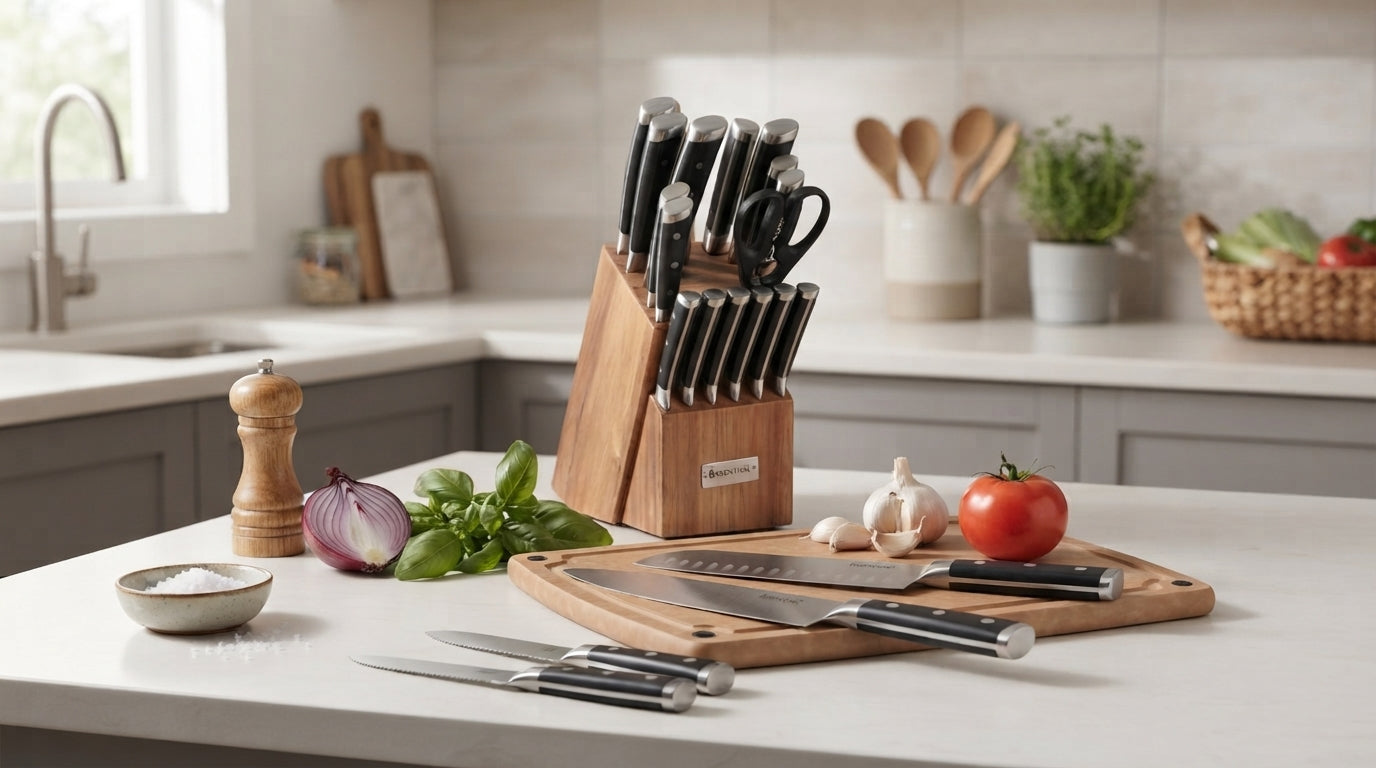
A good kitchen does not need every knife available. It needs the right knives for the way food is actually prepared, cooked, served, and enjoyed.
For most homes, the most useful knives are the ones that support daily routines: chopping vegetables, slicing fruit, cutting bread, preparing proteins, carving roasts, trimming small ingredients, and serving food at the table. A well-built knife setup makes cooking feel smoother and helps the meal move more naturally from prep to table.
The challenge is knowing which knives are truly useful and which ones will sit untouched in a drawer. A chef’s knife, santoku knife, bread knife, utility knife, paring knife, steak knives, carving knife, kitchen shears, sharpening steel, and knife block all serve different roles. Understanding those roles helps a home build a knife collection that feels organized instead of overwhelming.
This guide breaks down the kitchen knives every home should understand, what each knife is used for, how to choose between a basic setup and a complete knife block set, how to pair knives with cutting boards, and how to care for knives so they stay ready for everyday cooking.
The Quick Answer: What Kitchen Knives Do You Need?

Most home kitchens need a focused group of knives that can handle daily prep, bread, small ingredients, table service, and occasional hosting.
A practical kitchen knife setup includes:
- Chef’s knife
- Santoku knife
- Bread knife
- Utility knife
- Paring knife
- Steak knives
- Slicing knife or carving knife
- Kitchen shears
- Sharpening steel
- Knife block or safe storage system
A small kitchen can start with three core knives: chef’s knife, bread knife, and paring knife. A more complete kitchen benefits from a santoku knife, utility knife, steak knives, kitchen shears, and a carving or slicing knife for larger meals.
The strongest knife setup is not about having the most pieces. It is about having the right knife for each common task.
A complete knife block set can be useful because it keeps essential prep knives, table knives, shears, sharpening steel, and storage together in one organized system. This can make everyday cooking easier, especially for homes that cook frequently or want a more complete kitchen foundation.
What Makes a Kitchen Knife Essential?
A kitchen knife becomes essential when it solves a repeated cooking problem.
A chef’s knife handles most chopping and slicing. A bread knife cuts through crust without crushing the loaf. A paring knife handles small fruit, trimming, peeling, and detail work. Steak knives help at the table when food needs more cutting power. A carving knife supports larger proteins during holidays and gatherings.
An Essential Kitchen Knife Should
- Support a common kitchen task
- Feel comfortable and controlled in the hand
- Match the size of the food being prepared
- Work with the cutting board surface
- Be easy to clean and store
- Fit the household’s cooking habits
- Be used often enough to justify its place in the kitchen
A knife is not essential just because it comes in a set. It becomes essential when it earns a clear role in the kitchen.
Chef’s Knife: The Main Everyday Prep Knife

A chef’s knife is often the main knife in a home kitchen. It is designed for a wide range of prep tasks and can handle many everyday ingredients.
Use a chef’s knife for:
- Chopping vegetables
- Slicing onions
- Cutting herbs
- Preparing fruit
- Slicing cooked proteins
- Cutting larger ingredients
- Mincing garlic
- General meal prep
A chef’s knife has enough length and weight to handle larger tasks, but it should still feel controlled. It is one of the first knives most home cooks reach for because it can handle so many jobs.
When a Chef’s Knife Matters Most
A chef’s knife matters when the kitchen needs one reliable tool for daily prep.
If a household cooks dinner regularly, a chef’s knife becomes one of the most important pieces in the kitchen. It supports weeknight meals, meal prep, family dinners, and larger cooking sessions.
A good chef’s knife should feel stable, balanced, and comfortable enough for repeated use.
Santoku Knife: Best for Clean Chopping and Slicing

A santoku knife is another highly useful everyday prep knife. It is often slightly shorter and lighter than a traditional chef’s knife, with a blade shape that works well for clean chopping, slicing, and mincing.
Use a santoku knife for:
- Vegetables
- Fruit
- Boneless proteins
- Herbs
- Mushrooms
- Onions
- Garlic
- Everyday chopping
- Thin slicing
- Prep work that needs control
Many home cooks enjoy a santoku knife because it can feel nimble and easy to control. It is especially useful when working with vegetables and smaller ingredients.
Chef’s Knife vs. Santoku Knife
A chef’s knife is often more versatile for larger prep tasks. A santoku knife can feel more precise and controlled for chopping and slicing.
Both can belong in the same kitchen. The chef’s knife can handle larger tasks, while the santoku knife can support cleaner, more focused prep.
Bread Knife: Best for Bread, Pastries, and Delicate Foods

A bread knife has a serrated blade designed to cut through crust without crushing the soft interior.
Use a bread knife for:
- Bread loaves
- Baguettes
- Rolls
- Sandwich bread
- Croissants
- Pastries
- Cakes
- Tomatoes
- Soft fruit
- Layer cakes
A standard straight-edge knife can press down too hard on soft bread or delicate pastries. A serrated bread knife grips the surface and cuts through with less downward pressure.
When a Bread Knife Matters Most
A bread knife is essential for homes that buy or bake bread, serve brunch, prepare sandwiches, or cut cakes and pastries.
It is also useful beyond bread. Many soft foods with delicate interiors and firmer skins can be easier to cut with a serrated blade.
Utility Knife: Best for Medium-Sized Prep Tasks
A utility knife sits between a chef’s knife and a paring knife. It is smaller than a chef’s knife but larger than a paring knife, making it useful for medium-sized tasks.
Use a utility knife for:
- Small vegetables
- Sandwiches
- Citrus
- Cheese
- Small fruits
- Trimming ingredients
- Slicing cooked meats
- Quick prep tasks
- Foods too small for a chef’s knife
- Foods too large for a paring knife
A utility knife is especially helpful when a chef’s knife feels too large for the task.
Why a Utility Knife Belongs in a Knife Set
A utility knife fills the gap between large prep and detail work. It is the knife many cooks reach for when they do not want to pull out a full chef’s knife.
For compact kitchens, it can become one of the most frequently used tools.

Paring Knife: Best for Small Ingredients and Detail Work
A paring knife is small, precise, and useful for detail tasks.
Use a paring knife for:
- Peeling fruit
- Trimming strawberries
- Cutting small garnishes
- Removing seeds
- Deveining shrimp
- Segmenting citrus
- Detail cuts
- Small vegetables
- Small handheld prep
- Decorative cuts
A paring knife is not meant to replace a chef’s knife. It is meant to handle small tasks that require control.
When a Paring Knife Matters Most
A paring knife matters when the food is small, delicate, or held in the hand.
It is especially useful for fruit, garnishes, small vegetables, and detail work that would feel awkward with a larger knife.
Slicing Knife: Best for Roasts, Proteins, and Long Clean Cuts
A slicing knife is designed for longer, cleaner cuts through cooked proteins and larger foods.
Use a slicing knife for:
- Roast beef
- Turkey breast
- Ham
- Pork loin
- Large cooked proteins
- Brisket
- Large fruit
- Thin slices of meat
- Holiday meals
- Family-style serving
A longer blade helps create smooth slices without repeated sawing. This is useful when presentation matters.
Slicing Knife vs. Carving Knife
A slicing knife is typically used for long, clean slices. A carving knife is used with a carving fork to cut and serve larger proteins more confidently.
Both tools support larger meals, holidays, and hosting. A slicing knife helps with precision, while a carving set helps with control.
Steak Knives: Best for Table Service

Steak knives are not prep knives. They are table knives.
They are used when the meal requires more cutting power than a standard dinner knife.
Use steak knives for:
- Steak
- Pork chops
- Lamb
- Roasted meats
- Grilled chicken
- Thick sandwiches
- Crusty bread
- Firm roasted vegetables
- Sausages
- Hearty dinner plates
A good steak knife should feel comfortable in the hand and appropriate on the table. It should support the meal without making the table feel overly formal.
When Steak Knives Matter Most
Steak knives matter when guests need to cut food at the plate.
They are especially useful for dinner parties, grilled meals, family dinners, and meals with firmer textures.
A kitchen knife set with steak knives included can be useful because the household has both prep knives and table knives stored together.
Kitchen Shears: The Underrated Kitchen Tool
Kitchen shears are one of the most useful tools in a complete kitchen setup.
Use kitchen shears for:
- Cutting herbs
- Opening food packaging
- Trimming parchment
- Cutting kitchen twine
- Snipping scallions
- Portioning some foods
- Cutting small stems
- Quick prep tasks
- Opening bags
- Helping with everyday kitchen organization
Kitchen shears are not a replacement for knives, but they handle tasks that knives should not always be used for.
Why Kitchen Shears Belong in a Knife Block
Kitchen shears make the kitchen more efficient because they handle quick tasks without needing a cutting board. They are especially useful during busy meal prep when speed and convenience matter.
Sharpening Steel: Why Knife Maintenance Matters
A sharpening steel helps maintain the edge alignment of kitchen knives between sharpening sessions.
It does not replace proper sharpening, but it can help knives feel more ready for daily prep when used correctly.
Use a sharpening steel to help maintain:
- Chef’s knife
- Santoku knife
- Utility knife
- Paring knife
- Slicing knife
- Carving knife
Steak knives with serrated edges require different maintenance and should not be treated the same way as straight-edge prep knives.
Why Maintenance Matters
A dull knife makes prep harder and less controlled. It can crush ingredients, drag through food, and require more pressure.
A kitchen that uses knives regularly should also have a maintenance routine. Keeping knives clean, dry, safely stored, and properly maintained helps them stay useful for daily cooking.
Knife Block Storage: Why Organization Matters

Knife storage matters as much as the knives themselves.
A knife block helps keep knives visible, organized, and easier to reach. It also protects blades from loose drawer storage, where edges can rub against other tools.
Knife Block Storage Helps With
- Keeping knives together
- Protecting blade edges
- Keeping counters organized
- Making prep knives easy to access
- Reducing clutter in drawers
- Keeping shears and sharpening steel in one place
- Creating a more polished kitchen setup
A knife block is especially useful for households that cook often and want a complete prep station on the counter.
Drawer Storage vs. Knife Block
Drawer storage can work when knives are protected with blade guards or a knife tray. Loose drawer storage is not ideal because blades can become damaged and reaching into the drawer can be unsafe.
A knife block is useful when the household wants organization, access, and presentation in one place.
How Many Knives Does a Home Kitchen Need?
The right number of knives depends on cooking habits, household size, and storage space.
Minimal Knife Setup
A minimal setup includes:
- Chef’s knife
- Bread knife
- Paring knife
This covers basic chopping, bread, and small prep.
Everyday Home Cooking Setup
An everyday setup includes:
- Chef’s knife
- Santoku knife
- Bread knife
- Utility knife
- Paring knife
- Kitchen shears
- Sharpening steel
This setup supports most weekly cooking tasks.
Complete Kitchen Setup
A complete setup includes:
- Chef’s knife
- Santoku knife
- Bread knife
- Utility knife
- Paring knife
- Slicing knife
- Steak knives
- Kitchen shears
- Sharpening steel
- Knife block
This setup works well for households that cook often, host guests, and want prep knives and table knives in one coordinated system.
Knife Set vs. Individual Knives
A home can build its knife collection in two ways: buying individual knives or choosing a complete knife set.
Individual Knives Work Well When
- The kitchen only needs one or two upgrades
- The cook knows exactly which knife is missing
- Storage space is limited
- A specific blade type is needed
- The household already owns several good knives
Knife Sets Work Well When
- The kitchen needs a full reset
- The household wants coordinated storage
- Multiple knife types are needed
- The home cooks often
- The set includes prep knives and table knives
- A knife block is useful for organization
A knife set can be especially useful for first homes, kitchen upgrades, wedding gifts, housewarming gifts, and households that want one complete system.
How to Pair Knives with Cutting Boards

A knife and cutting board work as a system.
The knife does the cutting. The board creates the surface. If the board is too small, too unstable, or not suited for the task, prep becomes harder.
Use a Larger Board For
- Chef’s knife work
- Santoku chopping
- Meal prep
- Vegetables
- Slicing larger ingredients
- Batch cooking
- Roasts or cooked proteins
Use a Smaller Board For
- Paring knife tasks
- Citrus
- Herbs
- Garnishes
- Small fruit
- Cheese
- Quick prep
Use a Board with a Juice Groove For
- Cooked meats
- Tomatoes
- Citrus
- Watermelon
- Roasts
- Foods that release liquid
A cutting board should give the knife room to move safely. A large knife on a tiny board creates a crowded workspace.
How to Care for Kitchen Knives
Good knife care helps keep knives clean, organized, and ready for daily cooking.
After Every Use
Wash the knife after use. Use warm water and mild dish soap. Clean carefully with a soft sponge or cloth. Dry the knife fully before storage. Return it to the block, tray, or protected storage area.
For Hand Washing
Hand washing helps preserve blade appearance and handle finish over time. It also allows the knife to be dried immediately.
Do not leave knives soaking in the sink. Do not store them while wet.
For Dishwasher Cleaning
Always follow the product’s care instructions. Even when a knife is dishwasher safe, hand washing and immediate drying can help preserve blade sharpness and appearance over time.
Avoid
- Long soaking
- Loose drawer storage
- Harsh scrubbers
- Cutting on glass or stone surfaces
- Storing knives wet
- Leaving acidic food residue on blades
- Using prep knives as can openers or screwdrivers
- Using table knives for heavy prep tasks
A kitchen knife is a daily tool, but it should still be treated with care.
When to Replace Kitchen Knives
A knife should be replaced when it no longer feels safe, stable, or useful.
Replace a Knife When
- The handle becomes loose
- The blade is bent
- The tip is broken
- The edge cannot be maintained
- Rust or deep corrosion appears
- The knife feels unstable
- The handle cracks
- The blade is damaged beyond repair
- The knife no longer performs its role
A knife that does not feel controlled should not remain part of the everyday kitchen setup.
Shop Barenthal Knife and Prep Essentials
Barenthal 17-Piece Knife Set with Block
A complete kitchen knife set with chef’s knife, santoku knife, bread knife, slicing knife, utility knife, paring knife, steak knives, sharpening steel, kitchen shears, and acacia wood storage block.
Shop Barenthal 17-Piece Knife SetBarenthal 6-Piece Classic Serrated Steak Knife Set, German Stainless Steel
A polished serrated steak knife set for everyday dinners, grilled meals, and table service.
Shop Barenthal Classic Serrated Steak KnivesBarenthal 6-Piece Steak Knife Set with Wooden Storage Chest
A table-ready steak knife set with a wooden storage chest for organized storage and gifting.
Shop Barenthal Steak Knives with Wooden ChestBarenthal 2-Piece Carving Knife and Fork Set, 18/10 Stainless Steel
A carving knife and fork set for turkey, chicken, roasts, holiday meals, and elegant table serving.
Shop Barenthal Carving Knife and Fork SetBarenthal Composite Cutting Boards
Practical prep and serving boards for vegetables, bread, fruit, roasted meats, appetizers, and everyday cooking.
Shop Barenthal Composite Cutting Boards
Frequently Asked Questions
What Kitchen Knives Do I Actually Need?
Most home kitchens need a chef’s knife, bread knife, paring knife, utility knife, steak knives, kitchen shears, and safe storage. A santoku knife and slicing knife add more flexibility for households that cook often. A complete knife block set can be useful when the kitchen needs prep knives, table knives, maintenance tools, and storage in one organized system.
What Are the Three Most Important Kitchen Knives?
The three most important kitchen knives are usually a chef’s knife, bread knife, and paring knife. A chef’s knife handles most chopping and slicing. A bread knife cuts crusty bread and delicate baked goods. A paring knife handles small fruit, trimming, peeling, and detail work.
What Is a Chef’s Knife Used For?
A chef’s knife is used for everyday prep tasks such as chopping vegetables, slicing fruit, mincing garlic, cutting herbs, and preparing proteins. It is one of the most versatile knives in the kitchen and often becomes the main tool for daily cooking.
What Is a Santoku Knife Used For?
A santoku knife is used for clean chopping, slicing, and mincing. It works especially well for vegetables, fruit, boneless proteins, herbs, mushrooms, onions, and everyday prep. Many home cooks like santoku knives because they can feel controlled and easy to handle.
Do I Need Both a Chef’s Knife and a Santoku Knife?
A home does not strictly need both, but having both can be useful. A chef’s knife is strong for larger prep tasks, while a santoku knife can feel more precise for chopping and slicing. Together, they give the kitchen more flexibility.
What Is a Bread Knife Used For Besides Bread?
A bread knife can also be used for pastries, cakes, tomatoes, soft fruit, sandwiches, and delicate baked goods. Its serrated edge helps cut through firm exteriors without crushing soft interiors, making it useful for more than bread.
What Is a Utility Knife Used For?
A utility knife is used for medium-sized tasks that feel too small for a chef’s knife and too large for a paring knife. It works well for sandwiches, citrus, cheese, small vegetables, fruit, cooked meats, and quick prep tasks.
What Is a Paring Knife Used For?
A paring knife is used for small ingredients and detail work, such as peeling fruit, trimming strawberries, cutting garnishes, removing seeds, segmenting citrus, and working with small vegetables. It gives more control than a larger knife for close, precise tasks.
Is a Knife Block Set Worth It?
A knife block set can be worth it when the kitchen needs multiple knives and organized storage. A complete set can include prep knives, steak knives, shears, sharpening steel, and a storage block, making it useful for homes that cook regularly and want one coordinated system.
How Many Knives Should a Home Kitchen Have?
A minimal kitchen can work with three knives: chef’s knife, bread knife, and paring knife. An everyday kitchen may add a santoku knife, utility knife, steak knives, kitchen shears, and sharpening steel. A complete kitchen setup may include a full knife block set for prep, table service, and maintenance.
How Should Kitchen Knives Be Stored?
Kitchen knives should be stored in a knife block, drawer tray, magnetic strip, blade guard, or another protected system. Loose drawer storage can damage blade edges and create safety issues. Knives should be clean and fully dry before storage.
Should Kitchen Knives Go in the Dishwasher?
Always follow the product’s care instructions. Even when knives are dishwasher safe, hand washing and immediate drying can help preserve blade sharpness, handle finish, and appearance over time. Knives should not be left soaking or stored while damp.
Final Thoughts
The right knife setup makes everyday cooking easier.
A chef’s knife supports the main prep work. A santoku knife adds control. A bread knife protects delicate textures. A utility knife fills the gap between large and small prep. A paring knife handles detail work. Steak knives support table service. A carving knife helps with larger meals. Kitchen shears and sharpening steel make the setup more complete.
A home does not need every knife available. It needs the knives that match the way food is prepared, served, and shared.
Choose tools with clear roles. Store them safely. Care for them consistently. Pair them with the right cutting boards. Build a kitchen that feels organized, capable, and ready for daily meals.
Cut with confidence. Prep with control. Make every meal feel easier from the first slice.